

Dosya:A Taste of ESPRESSO.jpg - Vikipedi
İçeriğe atla
Ana menü
Gezinti
  • Anasayfa
  • Hakkımızda
  • İçindekiler
  • Rastgele madde
  • Seçkin içerik
  • Yakınımdakiler
Katılım
  • Deneme tahtası
  • Köy çeşmesi
  • Son değişiklikler
  • Dosya yükle
  • Topluluk portalı
  • Wikimedia dükkânı
  • Yardım
  • Özel sayfalar
Vikipedi Özgür Ansiklopedi
Ara
  • Bağış yapın
  • Hesap oluştur
  • Oturum aç
  • Bağış yapın
  • Hesap oluştur
  • Oturum aç

Dosya:A Taste of ESPRESSO.jpg
Sayfa içeriği diğer dillerde desteklenmemektedir.
  • Dosya
  • Tartışma
  • Oku
  • Wikimedia Commons üzerinde gör
  • Yerel açıklama ekle
  • Yerel açıklama kaynağı ekle
Araçlar
Eylemler
  • Oku
  • Wikimedia Commons üzerinde gör
  • Yerel açıklama ekle
  • Yerel açıklama kaynağı ekle
Genel
  • Sayfaya bağlantılar
  • Basılmaya uygun görünüm
  • Sayfa bilgisi
  • Kısaltılmış URL'yi al
  • Karekodu indir
Diğer projelerde
Görünüm
Vikipedi, özgür ansiklopedi
  • Dosya
  • Dosya geçmişi
  • Dosya kullanımı
  • Küresel dosya kullanımı
  • Üstveri
Dosya:A Taste of ESPRESSO.jpg
Bu önizlemenin boyutu: 800 × 533 piksel. Diğer çözünürlükler: 320 × 213 piksel | 640 × 427 piksel | 1.024 × 683 piksel | 1.280 × 853 piksel | 2.560 × 1.707 piksel | 5.616 × 3.744 piksel.
Tam çözünürlük ((5.616 × 3.744 piksel, dosya boyutu: 3,74 MB, MIME tipi: image/jpeg))
Bu dosya Wikimedia Commons'ta bulunmaktadır. Dosyanın açıklaması aşağıda gösterilmiştir.
Commons, serbest/özgür telifli medya dosyalarının bulundurulduğu depodur. Siz de yardım edebilirsiniz.
Bu dosya Wikimedia Commons'ta bulunmaktadır.

Özet

AçıklamaA Taste of ESPRESSO.jpg
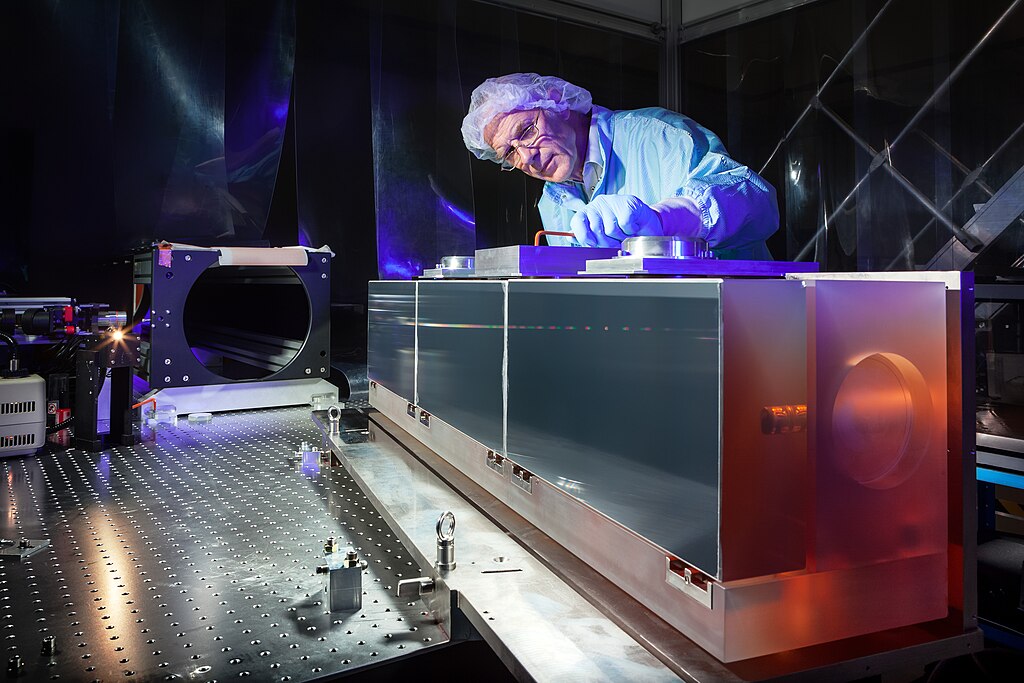
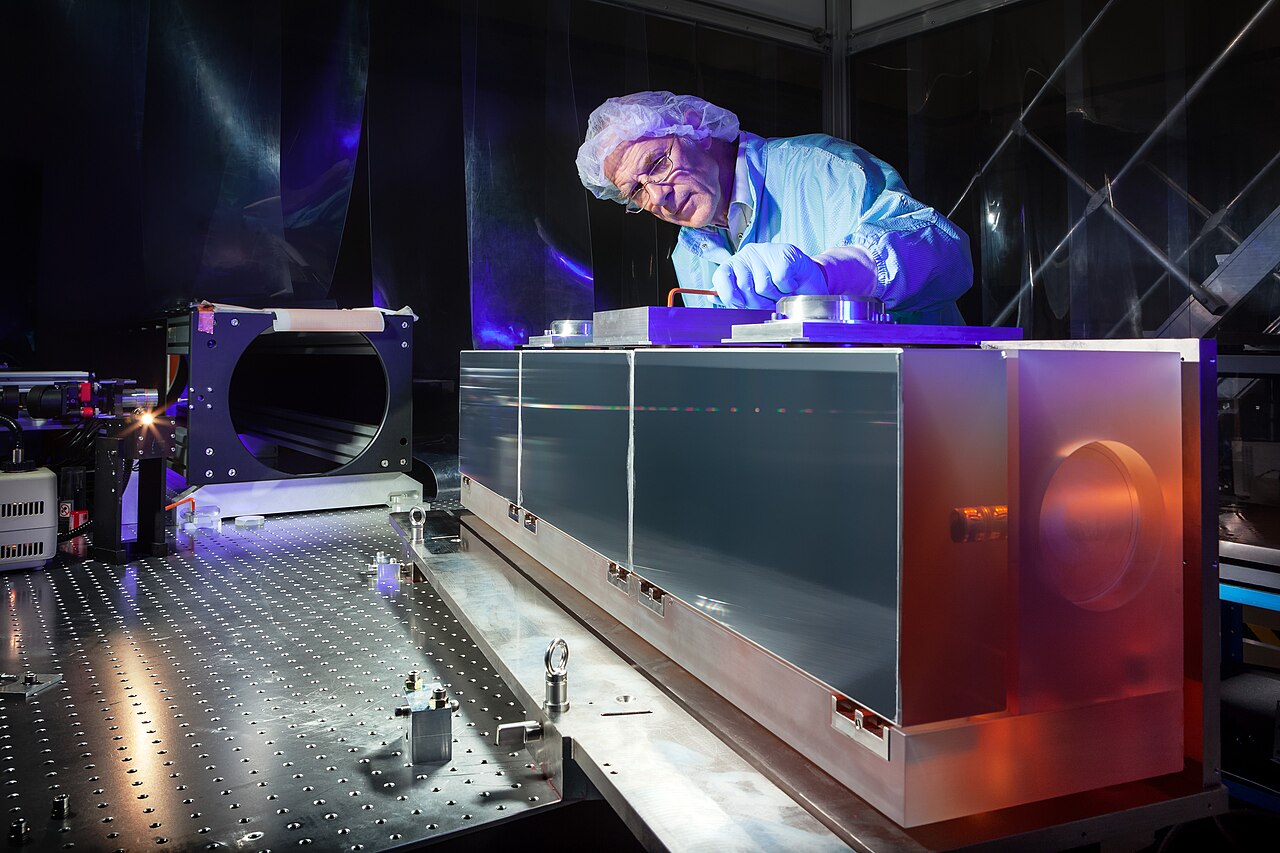
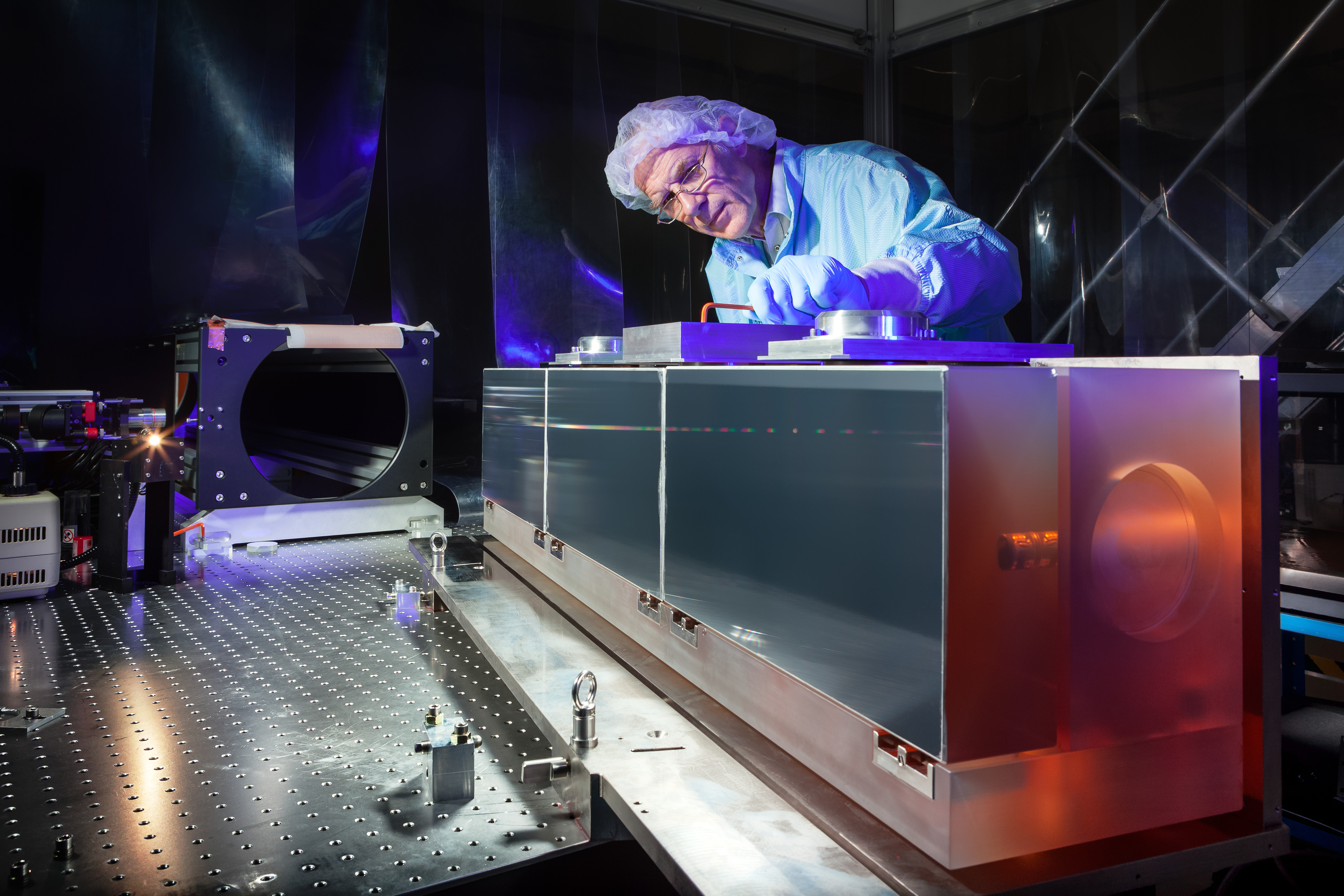
English: The huge diffraction grating at the heart of the ultra-precise ESPRESSO spectrograph — the next generation in exoplanet detection technology — is pictured undergoing testing in the cleanroom at ESO Headquarters in Garching bei München, Germany.

Engineers at ESO have recently completed the difficult process of aligning the grating. The production and alignment of this component is one of the key ESO contributions to the ESPRESSO project. The grating is the largest ever assembled at ESO, and its length matches the largest echelle grating ever made — the 1.2 x 0.3 metre grating for the HIRES spectrograph at the Keck 10-metre telescope.

After its final alignment, the grating is fixed in a permanent mount. All its components are made of Zerodur (the same material that is used for the mirrors of the VLT) and will require no further adjustments, ever. This mounting technique was pioneered at ESO, and demonstrated to work on earlier instruments.

When installed at ESO’s Paranal Observatory in Chile in 2016, ESPRESSO will combine the light from all four Unit Telescopes of the Very Large Telescope to create a virtual 16-metre aperture telescope. Its diffraction grating will split up the light into its component colours for analysis — spreading the light as a prism does, although relying on a different physical mechanism.

The successor of HARPS — the world’s foremost exoplanet hunter — ESPRESSO will take the search for exoplanets to the next level, allowing astronomers to search for Earth-like planets around nearby stars in the habitable zone [1]. It will have many other science applications, including the search for possible variations in the constants of nature at different times in the life of the Universe, and in different directions, through the study of light from very distant quasars.

Notes

[1] A planet in orbit around a star introduces a small and regular variation in the velocity component as measured along the line of sight (known as the radial velocity) by a distant observer on Earth. This variation can be observed as a “wobble” in the spectrum of the star as the lines shift to and fro about their central position as a result of the Doppler effect. As the planet moves away from the observer, the radial velocity change induces a shift of the star’s spectrum towards longer wavelengths (a redshift) and shorter wavelengths as it moves closer (a blueshift). These tiny shifts in the position of the star’s spectrum on the detector are on the order of a few nanometers, but can nevertheless be measured with ESPRESSO and used to infer the presence of planets.
Tarih 14 Eylül 2015, 10:00:00
Kaynak http://www.eso.org/public/images/potw1537a/
Yazar ESO/M. Zamani

Lisanslama

This media was created by the European Southern Observatory (ESO).
Their website states: "Unless specifically noted, the images, videos, and music distributed on the public ESO website, along with the texts of press releases, announcements, pictures of the week, blog posts and captions, are licensed under a Creative Commons Attribution 4.0 International License, and may on a non-exclusive basis be reproduced without fee provided the credit is clear and visible."
To the uploader: You must provide a link (URL) to the original file and the authorship information if available.
w:tr:Creative Commons
atıf
Bu dosya Creative Commons Atıf 4.0 Uluslararası lisansı altında lisanslanmıştır.
Şu seçeneklerde özgürsünüz:
  • paylaşım – eser paylaşımı, dağıtımı ve iletimi
  • içeriği değiştirip uyarlama – eser adaptasyonu
Aşağıdaki koşullar geçerli olacaktır:
  • atıf – Esere yazar veya lisans sahibi tarafından belirtilen (ancak sizi ya da eseri kullanımınızı desteklediklerini ileri sürmeyecek bir) şekilde atıfta bulunmalısınız.
https://creativecommons.org/licenses/by/4.0CC BY 4.0 Creative Commons Attribution 4.0 truetrue

Altyazılar

Bu dosyanın temsil ettiği şeyin tek satırlık açıklamasını ekleyin.

Bu dosyada gösterilen öğeler

betimlenen

telif hakkı durumu

telif hakkı alınmış

telif hakkı lisansı

Creative Commons Atıf 4.0 Uluslararası

kuruluşu

14 Eylül 2015

ortam türü

image/jpeg

dosya boyutu

3.924.886 bayt

boyu

3.744 piksel

genişliği

5.616 piksel

sağlama toplamı

716647975423ea44506fcb8e6f5952132ebadd11

tespit yöntemi: SHA-1

Dosya geçmişi

Dosyanın herhangi bir zamandaki hâli için ilgili tarih/saat kısmına tıklayın.

Tarih/SaatKüçük resimBoyutlarKullanıcıYorum
güncel10.58, 14 Şubat 202410.58, 14 Şubat 2024 tarihindeki sürümün küçültülmüş hâli5.616 × 3.744 (3,74 MB)C messierfull size
09.26, 15 Eylül 201509.26, 15 Eylül 2015 tarihindeki sürümün küçültülmüş hâli1.280 × 853 (208 KB)JmencisomUser created page with UploadWizard

Dosya kullanımı

Bu görüntü dosyasına bağlantısı olan sayfalar:

  • Spektroskopi

Küresel dosya kullanımı

Aşağıdaki diğer vikiler bu dosyayı kullanmaktadır:

  • az.wikipedia.org üzerinde kullanımı
    • Spektroskopiya
  • en.wikipedia.org üzerinde kullanımı
    • Spectroscopy
  • vi.wikipedia.org üzerinde kullanımı
    • Phổ học

Üstveri

Bu dosyada, muhtemelen fotoğraf makinesi ya da tarayıcı tarafından eklenmiş ek bilgiler mevcuttur. Eğer dosyada sonradan değişiklik yapıldıysa, bazı bilgiler yeni değişikliğe göre eski kalmış olabilir.

Katkı/SağlayıcıESO/M. Zamani
KaynakEuropean Southern Observatory
Kısa başlık
  • A taste of ESPRESSO
Resim başlığı
  • The huge diffraction grating at the heart of the ultra-precise ESPRESSO spectrograph— the next generation in exoplanet detection technology — is pictured undergoing testing in the cleanroom at ESO Headquarters in Garching bei München, Germany. Engineers at ESO have recently completed the difficult process of aligning the grating. The production and alignment of this componentis one of the key ESO contributions to the ESPRESSO project. The grating is the largest ever assembled at ESO, and its length matches the largest echelle grating ever made — the 1.2 x 0.3 metre grating for the HIRES spectrograph at the Keck 10-metre telescope. After its final alignment, the grating is fixed in a permanent mount. All its components are made of Zerodur (the same material that is used for the mirrors of the VLT) and will require no further adjustments, ever. This mounting technique was pioneered at ESO, and demonstrated to work on earlier instruments. When installed at ESO’sParanal Observatory in Chile in 2016, ESPRESSO will combine the light from all four Unit Telescopes of the Very Large Telescope to create a virtual 16-metre aperture telescope. Its diffraction grating will split up the light into its component colours for analysis — spreading the light as a prismdoes, although relying on a different physical mechanism. The successor of HARPS — the world’s foremost exoplanet hunter — ESPRESSO will take the search for exoplanets to the next level, allowing astronomers to search for Earth-like planets around nearby stars in the habitable zone [1]. It will have many other science applications, including the search for possible variations in the constants of nature at different times in the life of the Universe, and in different directions, through the study of light from very distant quasars. Notes [1] A planet in orbit around a star introduces a small and regular variation in the velocity component as measured along the line of sight (known as the radial velocity) by a distant observer on Earth. This variation can be observed as a “wobble” in the spectrum of the star as the lines shift to and fro about their central position as a resultof the Doppler effect. As the planet moves away from the observer, the radial velocity change induces a shift of the star’s spectrum towards longer wavelengths (a redshift) and shorter wavelengths as it moves closer (a blueshift). These tiny shifts in the position of the star’s spectrum on the detector are on the order of a few nanometers, but can nevertheless be measured with ESPRESSO and used to infer the presence of planets. More information ESPRESSO (Echelle SPectrograph for Rocky Exoplanet and Stable Spectroscopic Observations) is being developed by a consortium consisting of ESO andseven additional scientific institutes: Centro de Astrofísica da Universidade do Porto (Portugal) Faculdade de Ciências da Universidade de Lisboa, CAAUL&LOLS (Portugal) INAF–Osservatorio Astronomico di Trieste (Italy) INAF–Osservatorio Astronomico di Brera (Italy) Instituto de Astrofísica de Canarias (Spain) Physikalisches Institut der Universität Bern (Switzerland) Université de Genève (Switzerland).
Kullanım şartları
  • Creative Commons Attribution 4.0 International License
Verinin ilk yaratılma zamanı10.00, 14 Eylül 2015
JPEG dosyası yorumuThe huge diffraction grating at the heart of the ultra-precise ESPRESSO spectrograph — the next generation in exoplanet detection technology — is pictured undergoing testing in the cleanroom at ESO Headquarters in Garching bei München, Germany. Engineers at ESO have recently completed the difficult process of aligning the grating. The production and alignment of this component is one of the key ESO contributions to the ESPRESSO project. The grating is the largest ever assembled at ESO, and its length matches the largest echelle grating ever made — the 1.2 x 0.3 metre grating for the HIRES spectrograph at the Keck 10-metre telescope. After its final alignment, the grating is fixed in a permanent mount. All its components are made of Zerodur (the same material that is used for the mirrors of the VLT) and will require no further adjustments, ever. This mounting technique was pioneered at ESO, and demonstrated to work on earlier instruments. When installed at ESO’s Paranal Observatory in Chile in 2016, ESPRESSO will combine the light from all four Unit Telescopes of the Very Large Telescope to create a virtual 16-metre aperture telescope. Its diffraction grating will split up the light into its component colours for analysis — spreading the light as a prism does, although relying on a different physical mechanism. The successor of HARPS — the world’s foremost exoplanet hunter — ESPRESSO will take the search for exoplanets to the next level, allowing astronomers to search for Earth-like planets around nearby stars in the habitable zone [1]. It will have many other science applications, including the search for possible variations in the constants of nature at different times in the life of the Universe, and in different directions, through the study of light from very distant quasars. Notes [1] A planet in orbit around a star introduces a small and regular variation in the velocity component as measured along the line of sight (known as the radial velocity) by a distant observer on Earth. This variation can be observed as a “wobble” in the spectrum of the star as the lines shift to and fro about their central position as a result of the Doppler effect. As the planet moves away from the observer, the radial velocity change induces a shift of the star’s spectrum towards longer wavelengths (a redshift) and shorter wavelengths as it moves closer (a blueshift). These tiny shifts in the position of the star’s spectrum on the detector are on the order of a few nanometers, but can nevertheless be measured with ESPRESSO and used to infer the presence of planets. More information ESPRESSO (Echelle SPectrograph for Rocky Exoplanet and Stable Spectroscopic Observations) is being developed by a consortium consisting of ESO and seven additional scientific institutes: Centro de Astrofísica da Universidade do Porto (Portugal) Faculdade de Ciências da Universidade de Lisboa, CAAUL & LOLS (Portugal) INAF–Osservatorio Astronomico di Trieste (Italy) INAF–Osservatorio Astronomico di Brera (Italy) Instituto de Astrofísica de Canarias (Spain) Physikalisches Institut der Universität Bern (Switzerland) Université de Genève (Switzerland).
Anahtar kelimelerESPRESSO
İletişim bilgileri

http://www.eso.org/

Karl-Schwarzschild-Strasse 2

Garching bei München, None, D-85748 Germany

IIM sürümü4
"https://tr.wikipedia.org/wiki/Dosya:A_Taste_of_ESPRESSO.jpg" sayfasından alınmıştır
  • Gizlilik politikası
  • Vikipedi hakkında
  • Sorumluluk reddi
  • Davranış Kuralları
  • Geliştiriciler
  • İstatistikler
  • Çerez politikası
  • Mobil görünüm
  • Wikimedia Foundation
  • Powered by MediaWiki
Dosya:A Taste of ESPRESSO.jpg
Konu ekle